Building an app is just the beginning. Getting people to use it—and keep using it—is the real challenge. One of the most effective tools to solve this is already shaping the future of app engagement: AI chatbots in mobile apps.
AI chatbots act as virtual assistants inside your app. They answer user questions, guide people through your app’s features, and provide 24/7 support—all without needing a human on standby. This changes how users experience your app. They feel supported, understood, and more likely to come back. For founders, this means better retention, lower support costs, and more conversions.
Let’s explore how AI chatbots are transforming mobile apps and what that means for your startup.
Why AI Chatbots Matter for Mobile Apps
- Instant Help, Anytime
When users hit a roadblock in your app—like forgetting a password or struggling to find a feature—they want help immediately. If they don’t get it, they’ll often close the app and never return. AI chatbots solve this by offering instant, around-the-clock support. They can answer FAQs, guide users through workflows, or hand off to a human when needed.
Unlike email or live chat support, which might take hours, a chatbot responds in seconds. This is critical in mobile apps, where user attention is short and expectations are high.
Example:
A fitness app with a chatbot that helps users build routines or answer nutrition questions builds trust fast. Instead of waiting for a trainer’s reply, users get personalised guidance right when they need it.
- Better User Engagement
Chatbots aren’t just reactive—they can be proactive too. They can greet new users, onboard them, recommend features they haven’t tried yet, and offer encouragement or deals based on behaviour.
Imagine this:
A user logs into a finance app for the first time. The chatbot pops up and says, “Hey Sarah! Want help setting up your savings goal?” This simple interaction boosts early engagement, which is a key predictor of long-term retention.
Apps with chatbots often see higher session lengths, more daily active users, and better user satisfaction. They keep your app feeling alive.
Key Features That Make Chatbots Powerful
To get the most out of a chatbot, it needs more than just canned responses. Modern AI-powered chatbots use natural language processing (NLP) to understand real user questions—even if they’re messy or unclear.
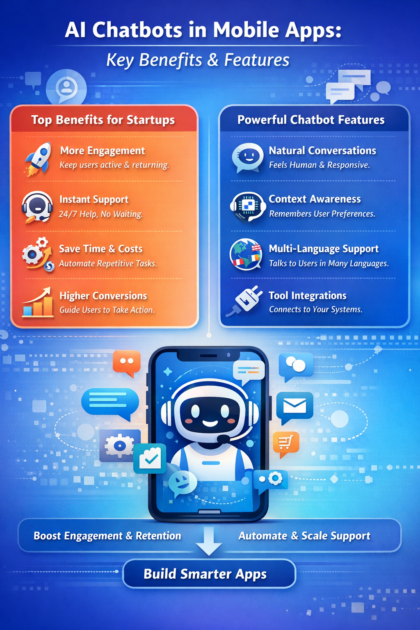
✅ Natural Conversations
AI chatbots can hold real conversations, detect emotion, and even shift tone depending on the user. This feels more human and less robotic.
✅ Context Awareness
Good bots remember user preferences. If someone prefers emails over push notifications or shops mostly for kids’ clothes, your chatbot should remember and respond accordingly.
✅ Multi-language Support
If your app targets diverse regions or global audiences, multilingual chatbots make your app feel inclusive from the first interaction.
✅ Integration with Other Tools
Chatbots can be connected to your backend or other platforms (like CRMs, payment gateways, or booking systems) to do real tasks—not just chat.
Real Impact: Case Studies & Results
- Domino’s Pizza integrated a chatbot in their app called “Dom” that lets users order food via chat. As a result, mobile orders increased significantly, and app engagement soared.
- Sephora’s chatbot provides tailored beauty advice in their app. It not only enhances user interaction but also drives in-app purchases by recommending products based on prior chats.
- Bank of America’s “Erica” chatbot now handles over 1 billion interactions annually. It helps users with transactions, spending advice, and account issues. Since launching, the app’s retention and customer satisfaction have significantly improved.
- H&M’s chatbot inside their mobile app offers styling tips and product recommendations. They saw a 30% increase in user engagement after implementation.
These companies invested in chatbot technology because it paid off: faster help, more engagement, higher conversions, and lower support costs.
What This Means for Startups & App Founders
You don’t need to be a global brand or have a huge budget to use chatbots effectively. Many startups are adding simple chatbot features during MVP or early growth stages. Here’s how:
Step 1: Start with Documentation
The first step to integrating a chatbot into your app is by building extensive documentation about the app or service. Based on the context size available, the AI bot can be trained with the most important content; with an MCP built to search through the full documentation on demand.The second thing to give the bot the ability to perform actions within the application. For instance, in a banking app, I would like the ability to tel the chatbot “How much did I spend at coffee shops last month.”
Step 2: Choose the Right Chatbot Platform
There are many no-code and low-code chatbot builders. Some top options include:
- Tidio – great for early-stage apps
- Landbot – powerful and easy to design conversations
- Dialogflow (by Google) – great for AI-powered flows
- Intercom – combines support and marketing in-app
Choose one that integrates easily with your tech stack and allows for growth.
Step 3: Design for Simplicity
Avoid overwhelming users with options. Keep responses short, clear, and human. Your chatbot should sound like a friendly guide, not a robot.
Step 4: Test and Train
Use your team or a small group of beta users to test it. Pay attention to dead ends or confusing replies. Over time, train the AI with new user input to make it smarter.
Step 5: Launch and Learn
Once your chatbot is live, monitor usage. Track key metrics like:
- How many users engage with it
- Time saved in support tickets
- Conversion uplift after interactions
- Drop-off rate from chatbot conversations
This feedback loop will show what’s working and what to improve.
Benefits That Grow with Your Business
Here’s what your startup gains from an in-app chatbot:
| Benefit | Description |
|---|---|
| More Engagement | Users stay longer and return more often |
| Instant Support | No waiting for replies or help |
| Automation | Handles repetitive tasks, saving time and money |
| Smart Insights | Learn from user questions and feedback |
| Higher Conversions | Guides users to take action inside your app |
As your app grows, the chatbot grows with you. It can handle more advanced questions, offer personalised messages, or even integrate with voice commands or AR features in the future.
Final Thoughts
AI chatbots in mobile apps aren’t a “nice to have”—they’re becoming essential. They create a smoother, smarter experience that users appreciate. And they give app founders powerful tools to boost retention, automate support, and build better relationships at scale.
You don’t need to be a technical expert or have a huge team to get started. A simple chatbot built around your users’ needs can make a huge impact—helping your app stand out in a crowded market.
Your app is a product. But your chatbot? That’s the voice that helps users feel heard. Start simple. Launch fast. Improve as you grow.