The startup world is evolving fast, and scaling a startup in 2026 looks very different from what founders faced a few years ago. With shifting markets, tighter funding conditions, and rapid advances in AI, many founders feel both excited and overwhelmed. Yet in the middle of all this change, one principle stands strong: sustainable startup growth always outperforms chaotic, fast-but-fragile expansion.
This guide breaks down a warm, simple, founder-friendly path to scale in the AI era. Whether you’re a first-time app founder or a non-technical SaaS builder, this approach helps you move forward confidently—with clarity, stability, and long-term success in mind.
Why Sustainable Startup Growth Matters More Than Ever
Sustainable vs. Hypergrowth
There’s a reason the “grow at all costs” mindset is fading. Startups that chase explosive growth without structure often burn out fast. Those that embrace sustainable growth — thoughtful hiring, steady customer acquisition, and careful financial management — tend to grow stronger over time.
Sustainable growth is not slow growth. It’s smart growth. It’s about building a company that can last, not one that looks big on the outside but cracks under pressure.
Retention Over Hype
Customer acquisition is expensive. Retention is profitable and powerful. Many young startups pour money into marketing, chasing new sign-ups every day. But the smartest founders know that existing customers — the ones who already trust you — are your strongest growth engine.
Happy customers tell others. They leave reviews. They recommend your product in communities. They upgrade.
Retention isn’t just a metric — it’s fuel.
Cash Flow and Calm Growth
Cash flow issues remain one of the most common reasons startups fail. Founders often underestimate how quickly expenses grow as teams expand, tools multiply, and operations become more complex.
Sustainable growth means managing your burn rate tightly, understanding your financial runway, and avoiding the temptation to “scale for optics”.
When your finances are under control, your mind is calm, your decisions improve, and your ability to innovate grows.
Scaling a Startup in 2026: Efficiency Over Headcount
The 2026 Scaling Landscape
The way companies scale today is dramatically different. Instead of hiring rapidly, founders are turning to automation and AI-driven workflows. Some of the fastest-growing startups now reach impressive milestones with surprisingly small teams because they work in a highly leveraged way.
Modern scaling is no longer about adding more people. It’s about amplifying the people you already have.
Examples from today’s scaling landscape show that lean teams — supported by automation — can outperform companies with double or triple the headcount. Startups are automating onboarding, customer support, internal documentation, analytics, and even parts of product development.
Founder Time Is Gold
A recent insight shared by founders shows that many still spend most of their time on “busywork”: scheduling, payroll, IT setup, approvals, formatting docs, preparing onboarding materials, or manually updating spreadsheets.
Every hour spent on these tasks is an hour not spent on validation, product, strategy, customers, or growth.
To scale sustainably in 2026, founders must reclaim their time. The more your operations run without manual intervention, the more you can focus on the high-impact work only you can do:
vision, leadership, product innovation, and customer understanding.
Precision in the AI Era
Today’s high-growth startups operate more like elite teams than large companies. Every role is sharp.
Every process is intentional. Every tool is chosen with purpose.
Because AI tools dramatically increase output, an employee today can achieve what once required multiple people. That means you don’t need a large organisation to scale effectively — you need a precise one.
Scaling in 2026 is about being strategic, not just “big.”
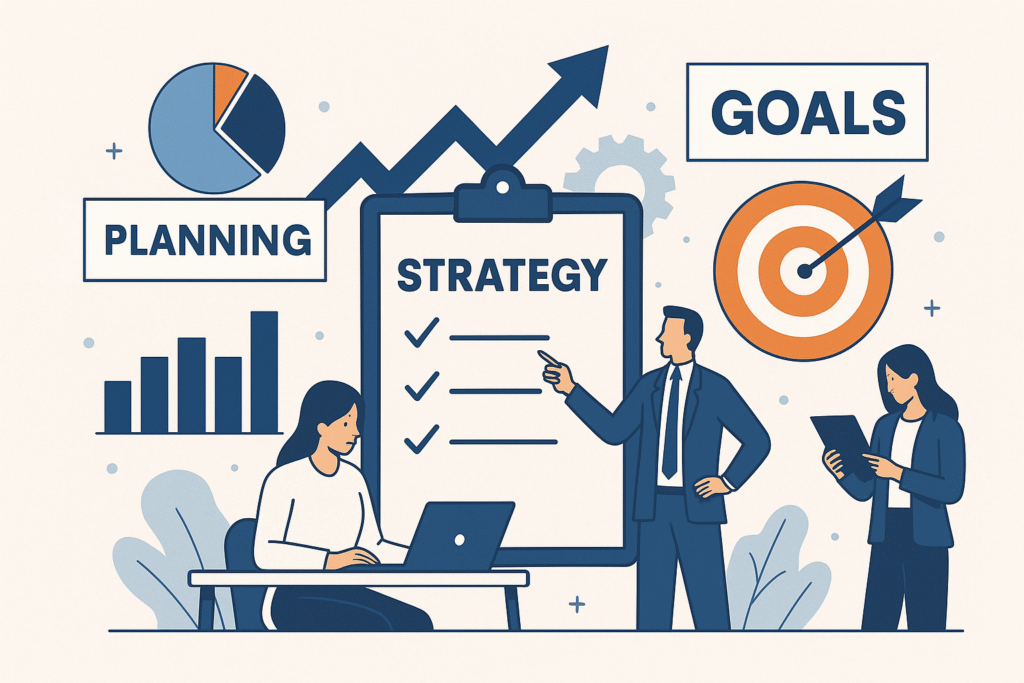
Building a Startup Growth Framework for Long-Term Success
Scaling a startup becomes easier when you break the journey into steps. Here’s a simple, practical startup growth framework that founders can follow:
Foundation – Nail Your Product-Market Fit and Retention
Before you scale, you must be sure your product delivers value consistently. Strong retention is the clearest sign that you’re ready to grow.
Focus on:
- A clear, specific problem you solve
- Real user feedback
- Consistent usage patterns
- Retention curves that flatten upward
- Users who say they’d be upset if your product disappeared
When retention is strong, growth becomes far easier — because you’re scaling something that already works.
Financial Discipline – Grow Within Your Means
Healthy financial habits keep your company alive long enough to win.
This includes:
- Tracking expenses
- Understanding your runway
- Budgeting for the next 12 months
- Avoiding unnecessary hires
- Managing cash flow weekly, not monthly
Financial clarity gives you the freedom to experiment and take smart risks.
Team and Culture – Build a Lean, High-Impact Team
A strong culture is like internal infrastructure — it quietly holds your company together as you grow.
The best teams in 2026:
- Are small but mighty
- Communicate openly
- Take ownership
- Move from “instructions” to “empowered action”
- Understand the mission deeply
Hiring slow and intentionally is far more sustainable than hiring fast and managing chaos.
Automation and Tools – Leverage AI to Scale Wisely
AI is transforming how startups operate. Founders today can automate entire workflows without writing a single line of code.
You can automate:
- Customer support FAQs
- Meeting notes and summaries
- Data entry and reporting
- Onboarding workflows
- Content drafting
- Lead nurturing
- Documentation updates
- Scheduling and reminders
Studies show that nearly a third of common tasks across many roles can be automated. That means your team can stay small while productivity grows significantly.
Automation isn’t about replacing people — it’s about removing friction, so your team can focus on meaningful work.
Strategic Expansion – Scale Your Reach Safely
Once you’ve nailed the basics — strong retention, financial discipline, a lean team, and automated operations — you’re ready to scale outward.
Expand into:
- New customer segments
- Paid marketing
- Additional product features
- New regions or industries
- Partnerships and integrations
But expand with intention.
Scale at a pace that lets you maintain quality, customer trust, and product stability.Growing too fast can break your systems. Growing too slow can let competitors catch up. Sustainable scaling finds the middle path — fast enough to win, but steady enough to last.
AI Tools for Founders: Working Smarter, Not Harder
AI tools are now essential for startup efficiency. They help even non-technical founders operate with the power of a much larger team.
Automate Busywork
From meeting transcription to daily reporting, AI assistants handle repetitive tasks reliably and instantly. This frees up founders to think and create instead of chasing admin work.
Smarter Customer Support
AI chatbots and automated help desks can answer common questions around the clock. This gives customers faster replies while your team handles deeper, more complex issues.
AI Writing and Content Support
Founders no longer need to spend hours crafting copy. AI tools help create:
- Marketing emails
- Landing pages
- Blog drafts
- Social media posts
- User documentation
- Product descriptions
You still add the human touch — but you save enormous time.
AI-Powered Insights
Analytics tools powered by AI can reveal behavioural trends, spot churn early, and highlight which features drive growth.
Better insights → better decisions → safer scaling.
AI isn’t a replacement for your judgment. It’s a multiplier of your abilities.
Conclusion: Grow Fast, But Grow Smart
Scaling a startup in 2026 is a blend of opportunity and discipline. With so many powerful tools available, even small teams can become industry leaders. But lasting success comes from strong foundations, not shortcuts.
- Prioritise your customers.
- Build a lean, high-impact team.
- Automate everything repeatable.
- Stay financially disciplined.
- Use data and AI to guide your decisions.
You don’t need to do this journey alone. Many first-time founders grow faster when partnering with teams who’ve done it before.
Ready to scale your startup? Book a free discovery session with Appomate.